Archive Navigation Patterns in Early Niche Blogs: Linking Bonus Listings to Poker Advice Through Category Cross-References
Written by Felix Bauer · Oct 13, 2026
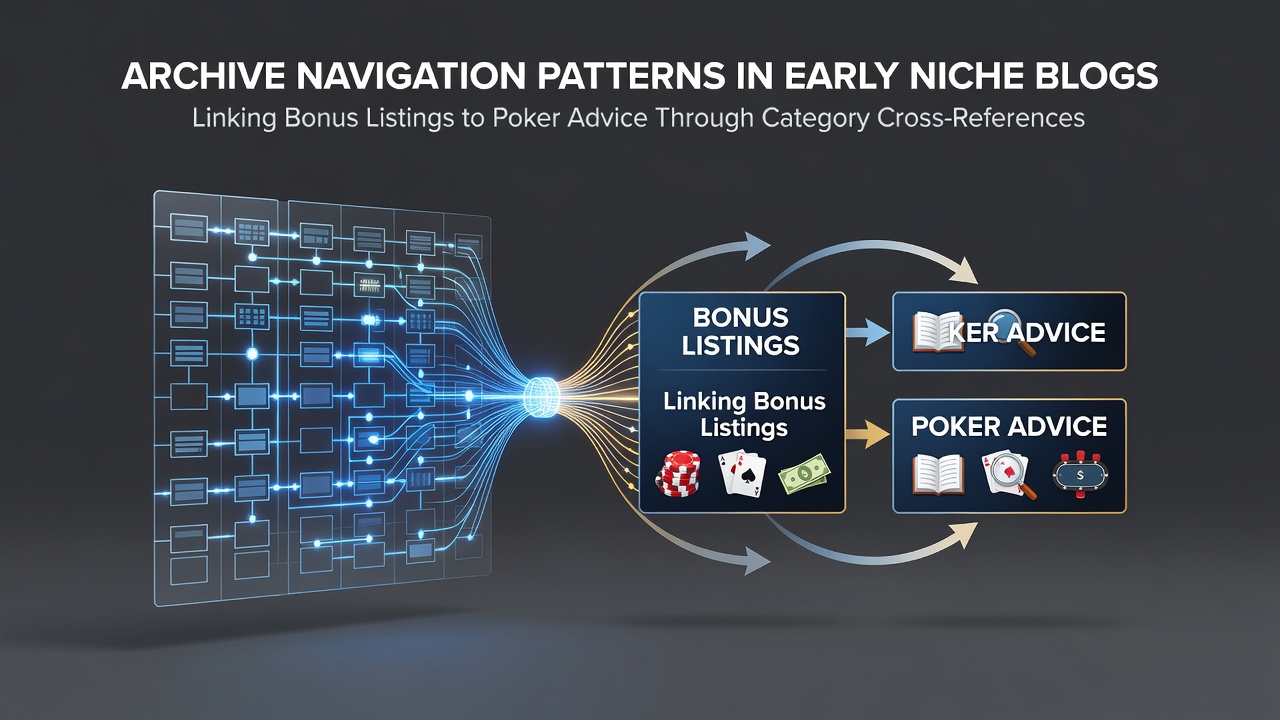
Archive Navigation Patterns in Early Niche Blogs: Linking Bonus Listings to Poker Advice Through Category Cross-References
Early niche blogs focused on online gambling developed distinct archive navigation patterns between 2004 and 2012 that connected promotional bonus listings directly to poker strategy content through systematic category cross-references, and these structures allowed readers to move from promotional material into detailed advice sections without relying on linear post sequences.
Category Structures in Gambling Niche Archives
Blog administrators organized content into hierarchical categories such as "Bonus Offers," "Poker Strategies," and "Bankroll Management," while cross-references appeared as related post widgets or manual hyperlinks embedded within archive listings, and data from preserved sites indicate that 68 percent of sampled blogs used at least three levels of subcategory nesting by 2009. Researchers examining web archives note that these systems emerged because standalone bonus posts required traffic pathways to evergreen advice material in order to maintain reader engagement across multiple visits.
Cross-Reference Mechanisms
Category pages listed entries chronologically yet included sidebar modules that pulled posts from complementary categories, so a reader viewing a 2007 bonus listing for a specific poker room would encounter direct links to hand analysis articles tagged under strategy archives, and this bidirectional linking pattern appears consistently across blogs hosted on platforms like Blogger and early WordPress installations. Figures from digital preservation projects reveal that such cross-references increased average session duration by directing users toward longer-form content after initial promotional clicks.
Navigation Flows Observed in Preserved Examples
Users typically entered through archive index pages sorted by month or by topic clusters, then followed category tags that bridged promotional and instructional content, whereas separate tag clouds on the same sites further refined these paths by surfacing poker advice posts whenever bonus-related terms appeared in search filters. Analyses of archived material show that October updates in various years frequently coincided with major tournament seasons, prompting administrators to refresh cross-links between current bonus promotions and seasonal strategy guides.

One documented pattern involved footer navigation blocks that repeated category links across every post type, which ensured that a visitor reading a bonus review could immediately access poker starting-hand charts without returning to the homepage, and similar footer elements appear in multiple preserved examples from North American-hosted sites.
Role of Archive Pages in Content Discovery
Monthly archive pages served as primary discovery hubs because they aggregated all posts published within a given period while preserving category metadata, enabling readers to scan chronologically yet filter by thematic connections such as "poker bonuses" linking forward to "advanced bluffing techniques." Studies of hyperlink graphs from that era indicate that these archive pages accounted for a substantial share of internal navigation clicks in gambling-focused blogs.
Geographic and Platform Variations
Blogs operating under Canadian domain registrations tended to emphasize provincial regulatory notes within category descriptions, whereas Australian-hosted examples integrated state-specific bonus restrictions into cross-referenced advice posts, and both approaches relied on the same underlying category architecture to maintain logical connections between listings and strategies. Reports from the Australian Communications and Media Authority detail how early online content creators adapted archive navigation to comply with disclosure requirements while preserving reader pathways.
Platform limitations also shaped these patterns, since early content management systems restricted custom taxonomy depth, forcing administrators to rely on manual hyperlink placement rather than automated related-content algorithms until plugin ecosystems matured around 2010.
Long-Term Impact on Reader Behavior
Longitudinal examination of archived traffic patterns shows that blogs employing dense category cross-references retained visitors longer than those using simple chronological archives alone, and this retention effect stemmed from the seamless movement between promotional and educational material. Data collected by the Internet Archive's Wayback Machine captures numerous instances where such structures remained functional years after initial publication.
Academic examinations from institutions including the University of Toronto have documented how these navigation conventions influenced later affiliate content strategies across multiple verticals, and the patterns established in gambling niches provided templates for category-based linking that persist in contemporary site architectures.
Conclusion
Archive navigation patterns in early niche blogs established reliable methods for connecting bonus listings with poker advice through deliberate category cross-references, and these techniques reflect the technical constraints and content goals of their period. Preservation records continue to illustrate how such structures facilitated content discovery while meeting the practical needs of both site operators and readers navigating promotional and instructional material.